In a world of universal deceit, telling the truth is a revolutionary act, George Orwell

Indignez-vous ! Stéphane Hessel

“Le courage c’est de chercher la vérité et de la dire ; c’est de ne pas subir la loi du mensonge triomphant qui passe, et de ne pas faire écho, de notre âme, de notre bouche et de nos mains aux applaudissements imbéciles et aux huées fanatiques ”.” – Djordje Kuzmanovic


Affichage des articles dont le libellé est military. Afficher tous les articles

jeudi 23 avril 2015

Blog The mad Stockholm submarine - story or saga? (eng)

The mad Stockholm submarine - story or saga?

(Media Fishing in paranoid water- Russian baiting season)
Give me a ping, Vasili. One ping only, please. The Hunt for Red October, 1990

UPDATE APRIL 2015

The "Russian sub" bubble has burst.     It turns out that the frantic search for the "fictive" sub was all along  a "workboat".

 http://www.ibtimes.co.uk/russian-submarine-sighted-near-stockholm-was-civilian-boat-claims-swedish-admiral-1496146


"The analysis has shown that the photograph taken in Stockholm's inner archipelago was of a smaller boat," Grenstad, told Dagens Nyheter newspaper.

The admiral, who was the deputy chief of the large-scale search operations launched after the sighting, identified the vessel as a 10.5m long, white plastic boat named "Time Bandit".

 Update 14th Nov
http://m.apnews.com/ap/db_268781/contentdetail.htm?contentguid=Wraf0Mwz

http://www.forsvarsmakten.se/en/news/2014/11/confirmed-submarine-in-the-stockholm-archipelago/

The Swedish Prime Minister, Stefan Lofven, said "clear evidence" that a small submarine did illegally enter Swedish waters last month.


" A second observation was made by a naval corvette. Following strong indications on its sensors, a closer examination of the area was conducted and recently made traces were found on the bottom."


http://www.forsvarsmakten.se/siteassets/6-aktuellt/nyheter/2014/bildspel-fran-pressmote-141114.pdf


Update 6th Nov

The Swedish authorities still have the jitters over "security" in the region, so have conducted military exercises on Friday. At least this time, they don't seem to be hunting for invisible subs.

 https://twitter.com/andersostlund/status/530396106090622976/photo/1

Update 5th Nov 
A Dutch submarine was in Sweden!
 http://vlt.se/nyheter/vasteras/1.2684084--jag-sag-en-ubat-200-meter-ut-i-vattnet-

and a Swedish was also in the area; http://m.apnews.com/ap/db_268781/contentdetail.htm?contentguid=Wraf0Mwz


Unknown object in Swedish waters. Estonian cartoon by Urmas Nemvalts, published by Postimees
 
Last week, the Swedish armed forces were looking for some kind of foreign submarine for 8 days, with an approximate cost of 20 environ 20 million SEK, ($2.8m).  The hunt was finally called off on the 24th of October, so the origin & nationality of the "underwater foreign activity" remains undiscovered.


In a frenzied hunt reminiscent of the "Cold War days", the Swedes deployed a number of warships, patrol boats, minehunters, helicopters & planes, and around 200 personnel to locate the intruder, but it seems to no avail. Two locations, (as indicated in a press briefing), were searched, one within the Stockholm archipelago and another off the coast in the Baltic Sea.


It all started with information released to the Swedish daily Svenska Dagbladet, citing unidentified sources, about the interception of a distress message, supposedly sent out on a Russian distress frequency.  So the first story about a damaged Russian submarine was quickly picked by the international press & flashed across the world.  Then there were about 5 "credible" sightings of suspicious marine activity from members of the public, including a grainy photo. Practically right from the start, the Swedish press jumped to the reckless conclusion that the intruder was a Russian submarine, without the slightest shred of any credible sources or evidence of its flag whatsoever to back this up. The international media circus also kicked in, adding their own flourishes to the ever increasing chorus of "it's a Russian sub" headlines.

Within a couple of days, the international media narrative went from a search for a "foreign underwater operation" to a dramatic 007 style hunt for a Russian mini-submarine. "A Russian miniature submarine is being pursued by the miniature Swedish navy". The Guardian 20/10/14. To add to the mystery, the Swedes then also went looking for a 'man in black', photographed on a beach, not surprisingly, the farcical media chorus line for this was "a Russian spy". The story was swiftly developing according to the Monty Pythonesque application of the principles of logic. Allegedly, the 'spy' turned out to be a local pensioner called Ove sea fishing.


Moscow denied that it was one of their naval vessels and suggested that it could have been a Dutch NATO sub instead, the Bruinvis.  The Dutch Ministry of Defence in turn vigorously denied that this was the case, in spite of the fact that it was in Tallin, a Baltic port during this period.  But on Sunday, the media circus didn't stop to ask any further questions, but rather carried on and speculated on the reportedly bizarre activities of a commercial ship, the NS Concord, as being somehow connected to the "Russian sub". More unsubstantiated media claims were made about the NS Concord, which was supposed to have some connections to Vladimir Putin himself.
Once again, the media continued to speculate on the NS Concord, even after these media claims, could not be confirmed by the Swedish Coast Guard since its spokesman Anders Nordin said that; "NS Concord's movements were consistent with the normal movements of a crude oil tanker.” Here is a twitter example of the media claims that the tanker's movements were abnormal.


 Laconically, the Russian Ministry of Defence spokesman described the Swedish operations as a "tragicomedy" and was looking forward to "the culmination of this exciting operation" to find a Russian submarine. Furthermore, it was quite amazing to find out that your average hack took this opportunity to instantly become some kind of Russian naval submarine expert as well as a shipping expert.

While the Swedish military didn't actually officially give any details on the nationality of the intruder, it didn't deter the international press in producing tonnes of anti-Russian propaganda laced with cold war rhetoric. The Swedish military spokesman, Rear-Admiral, Anders Grenstad said "I don't want to comment on what Russia says. I have not pointed fingers at any nation."   He equally dismissed the original press reports of a distress signal:  "The Armed Forces has no information about distress calls, or that any emergency frequency has been used."

Rear Adm. Anders Grenstad, stated that "Our assessment is that in the inner archipelago there was a plausible foreign underwater operation." Then he talked about "strange underwater activity".  As the search progressed, it was becoming evident that the Swedish
military were not sure at all as to the type of craft it was, as Rear Adm. Grenstad said:

“It could be a submarine, or a smaller submarine,” said Grenstad. “It could be divers using some form of moped-like underwater vehicle and it could be divers that don’t have any business on our territory. This does not belong to us. It is a foreign vessel and we have no indications that there would be any civilians involved in underwater activity.”
Later on in the week, the search morphed into a hunt as the Swedish military stated that it could use weapons to force the submarine to the surface. Yet the original story was of a submarine in distress. Given that Sweden has a network of underwater sensors, it is not surprising that they detected some kind of underwater activity, but how does that relate to the secondary search area 50km from Stockholm, further out in the Baltic Sea?

On 23th October, the Swedish government announced an extra SEK300m each year for the next 5 years on defence spending. Quite by chance, on the next day the "unidentified underwater object", (UUO) search was called off.   Was this entire "submarine hunt" just a pretext in order to justify an increased military budget? Specialised anti-submarine warfare (ASW) helicopters were retired in 2008.


The whole story has the distinctive flavour of a 1980's Cold War incident involving Sweden hunting Soviet and NATO submarines. The latest story so effectively 'seeded' by the press, seemed to play straight into the hands of those wanting Sweden to join NATO. This could also be a very "valid" reason for Sweden to forge a closer alliance with NATO. Moreover, Sweden stated it would suspend military cooperation with Russia. In a recent poll, it was reported that
37% of Swedes said they supported joining Nato while 36% were against. Five months ago a poll showed 28% per cent in favour and 56% against.

There is one certain outcome to this submarine saga, as it has spooked the public and politicians into believing that there is a clear & persistent Russian military threat on their doorsteps. More worryingly, it has resulted in increasing tensions in the Baltic region over perceived Russian aggresiveness. Take for instance this twitter message from Edgars Rinkevics:


Closely following events in the Swedish territorial waters, may become a game changer of the security in the whole Baltic Sea region     - Edgars Rinkevics (@edgarsrinkevics) 19 Octobre 2014


Even Carl Bildt jumped on the "Russian submarine" bandwagon: https://twitter.com/carlbildt/status/523736685579079680


  Anders Östlund ‏@andersostlund

Sweden have to increase its military in size and capcity but it also have to join NATO. Standing alone against Russia is not an option.


Some humour

https://twitter.com/Russian_Sub

BREAKING: Sweden sends task force to Graz, Austria to check if their Kunsthaus is in fact a Russian submarine. pic.twitter.com/4ja2oto5RD    - Varyagi (@varyagi) 22 Octobre 2014

Warning. KGB put fake submarines everywhere to confuse space intelligence from #Sweden. Be careful! #svpol pic.twitter.com/3MM269XhRa     - Sergei Kostigoff (@kostigoff) 22 Octobre 2014
Notes

Typical example of euro-Atlantic MSN slant on the events: http://www.theguardian.com/commentisfree/2014/oct/20/guardian-view-on-sweden-defence-nato-inevitable

Sources


http://www.atlanticcouncil.org/blogs/natosource/swedish-defense-is-nato-inevitable
http://www.dailymail.co.uk/news/article-2799091/sweden-steps-search-crippled-russian-submarine-making-mayday-distress-call-coast.html
http://www.dn.se/nyheter/sverige/ob-redo-att-tvinga-upp-ubat-med-vapenmakt/

 http://www.atlanticcouncil.org/blogs/natosource/for-first-time-more-swedes-favor-joining-nato-than-against

vendredi 14 novembre 2014

Blog video HRW Donbass weapons use (eng fr)


Switzerland: 'Cluster munition launches came from Ukrainian military territory' - HRW
RuptlyTV


SOT. Mark Hiznay, Human Rights Watch (in English): "So we have eyewitnesses to rocket launches in the area, from territory controlled by the Ukrainian military on all three days of the cluster munition attacks that we documented in central Donetsk."

SOT Mark Hiznay, Human Rights Watch (in English): "It didn't take us very much to find these misfired weapons, they had been abandoned and the civilians are finding them. So even if you approach what happens in this forum from the point of view of military utility as opposed to humanitarian imperative, this goes towards military utility, the unreliability of the weapons being used."

SOT. Bonnie Docherty, Human Rights Watch (in English): "We have a range of evidence about the use of incendiary weapons in Ukraine. First we talked to witnesses who saw firework-like weapons dropped. We've seen evidence of burned homes but most importantly we've seen evidence of the weapons themselves. We've found all the key pieces of the incendiary weapons launched by grad rockets in two towns: in Ilovaisk and in Lugansk, and we also found evidence of the same pieces in nearby misfired rockets and we have firm evidence, firm physical evidence, that these weapons were indeed incendiary weapons."

SCRIPT

Human Rights Watch (HRW) presented their findings on the use of incendiary and cluster munitions in Ukraine during a press conference in Geneva, Wednesday. HRW's Mark Hiznay said that organisation had "eyewitness" evidence of "rocket launches in the area, from territory controlled by the Ukrainian military on all three days of the cluster munition attacks that we documented in central Donetsk."

Human Rights Watch officer Professor Bonnie Docherty said that the organisation has "firm physical evidence" of the use of incendiary weapons in Ilovaisk and in Lugansk.
En français


Mark Hiznay de Human Rights Watch, a déclaré que l'organisation avait preuve « témoin oculaire » de « lancement de roquettes dans la région, du territoire contrôlé par les militaires ukrainiens tous les trois jours des attaques avec 'cluster' munition qui nous avions documenté au Donetsk central. »
+
 "L'organisation a "la preuve physique  irréfutable" de l'utilisation d'armes incendiaires dans  le Ilovaisk et dans le Lugansk."

jeudi 6 novembre 2014

Blog: blowing the story out of the water Russian incursions (eng)


First came the Swedish imaginary "Russian sub"  signal, followed some frantic hunt for an "foreign underwater intruder". The Swedish officials were at pains not to give out a nationality, but that it didn't stop the media from putting their own spin on the 'events'. In spite of this the local & international press hurriedly jumped to the conclusion that it was Russian, (somehow without the slightest shred of evidence or source).

Then came the media reports of multiple Russian military air sorties over Europe & the Black Sea, described by NATO as "provocative". The NATO air intercepts took place in international airspace, something that a lot of the press failed to mention.

At the same time, some of the UK press had a hard time spotting the subtle difference in nationality & make of an Antonov plane that got escorted by fighter jets over London. Was it a Russian plane? No it turned out to be Latvian plane. Finally the make of the plane was identified as being Ukrainian & not Russian.

Now we move onto the non-story of a Russian oceanographic ship:
From AFP:  The Portugese Navy escorted a Russian oceanographic ship out of its waters Wednesday in response to the latest in a series of territorial incursions by a Russian vessel or plane.
Waters?  No in fact it took place in the Portuguese Exclusive Economic Zone, (EEZ).
Portugal identified the ship in the section of sea it has exclusive resource rights over and then guided the vessel back into international waters, Portugal's Defence Minister Jose Pedro Aguiar-Branco told Portugese press agency LUSA.
An EEZ is not Territorial Waters!  In addition to AFP, the BBC picked up the non-story in & cobbled up a series of paragraphs on Russia & the events on Ukraine,  to make it look like that it is all somehow connected up. The BBC revealed a little detail that AFP completely missed out:
 The Russian ship was in international waters, more than 12 nautical miles (22km) from the coast.
The only snag that I see with this sentence, it doesn't actually give the location or distance of the Russian ship, since it instead unhelpfully refers to 12nm limit for territorial waters.  The whole thing has been distorted since an EEZ  only gives a country a "sovereign right"  to below the surface of the sea. The surface is in INTERNATIONAL WATERS. 

International airspace or waters, just a minor detail I suppose for the press. Information that might blow the story & associated histrionics out of the water.


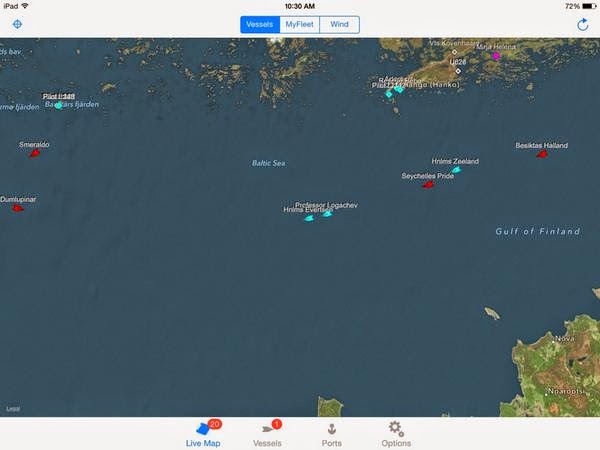
The Russian ship appears to be the RV Professor Logachev,  which had in some circles been supposedly connected to the Swedish submarine story.  The AIS feed showed that the vessel was trailed by a Dutch warship when it was in the Baltic.  https://twitter.com/AirForceFreak74/status/523845233990443009/photo/1.   The vessel is listed as being en route to Las Palmas, so taking the shipping lane off Portugal would have made sense.  But it wasn't made welcome by the Portuguese Navy. 

Background info on the RV Professor Logachev:

http://www.soundocean.com/cgge/rv-professor-logachev

Wikipedia


As can be seen in the above still from the MARINE AIS, the Russian ship is 'escorted' & tailed
 by no less than 3 Dutch NATO warships in the Baltic.

 Sources:

http://www.atlanticcouncil.org/blogs/natosource/portugal-escorts-russian-ship-from-its-waters

http://www.bbc.com/news/world-europe-29919036


See also:

The Earth: Shifting away from UN global security to being NATO’s mandate: http://lepontduhadu.blogspot.fr/2014/10/blog-sad-story-of-nato-and.html


mardi 28 octobre 2014

Blog - Russian submarines in the Arctic - the saga continues (eng)

Russian submarines in the Arctic - the saga continues

Hold the front page, it's no longer submarines in Sweden, but this time a case involving a mystery sub in the Arctic. The topic of Russia and its military 'creeping around' is growing legs. When will this media 'non-news' about subs and Russia get kicked into touch? Here is the title of the Daily Telegraph article by Ali Kefford in question: "Mystery submarine sighting gives clue to Russia's Arctic ambitions".


The article starts with "A chance encounter by scientists adrift on an Arctic ice floe has given the first clues to a new Cold War being played out in in the far north, where Vladimir Putin has made no secret of his ambitions to extend Russian influence."


The article relates the story of Norwegian scientists who spotted an unknown submarine on the 16th of October.  The article states that it a submarine that is an "aging nuclear research vessel".  The writer considers the research vessel as "part of President Putin's plan to send 6000 troops to an area rich in oil and gas".


Submarines Arctic patrols

Interesting turn of words from the writer, "chance encounter", as if it is rare as hens' teeth to see surfacing subs in the Arctic. However, if as the article suggests, it is the "Orenburg", then, it was indeed a" chance encounter", since the Russian sub carries out sensitive missions for the Russian Ministry of Defense's Main Directorate for Deep-Sea Research (GUGI).   Even so, the reality is that it isn't that rare for submarines to turn up in the Arctic; especially US ones and other NATO subs. In fact, just by trawling through the internet, several videos are online, featuring submarines breaking through the ice" in the polar region on exercise:


The article continues by giving the long & lat, (89° 17.5' N, 172° 42.9' W) of the location as well stating that "She has been potentially identified as the Delta class boat Orenburg." 

Maybe the Russians just wanted to have a swim alongside their sub or is it the Russian version of the ice bucket challenge, the sea being the bucket!!!: https://www.youtube.com/watch?v=qQ2oFTuyYck.  The sub in the video is also a Detla class. Another video showing a russian sub in the Arctic: https://www.youtube.com/watch?v=W2wOOrs01kE

Ali Kefford finishes his article off by picking up again on his unnamed senior naval source; (once more a case of citing anonymous sources): "There is almost certainly a US submarine there now," said the source. "And if there isn't one there permanently below the Arctic ice cap, the High North will be on a periodic patrol cycle. The point being made by the unnamed senior naval source is the fact that submarines do in fact patrol and go on exercises in the Arctic, including the US.


Sadly it seems to be journalistic de rigeur now not to bother finding named sources of information or to do some meaningful or measured research on Russia & its interests in the Arctic; scaremongering the readers by using Cold War rhetoric is much easier these days. The journalist did not even provide any information whatsoever over the reasons as to why Russia is keenly involved in the Arctic.
 

 Russia & the Arctic

Let me step in where the Daily Telegraph left off.  Basically, there are two aspects to the Russian involvement in the Arctic.  A huge chunk of the Arctic region is in fact within Russia's maritime borders. Ali Kefford in his article has skipped over this fact by simply omitting to state where the 6000 troops are being sent. Some of these troops have already set foot on Kotelny Island, located in the Novosibirsk Archipelago, one of the first military bases being set up in the Arctic.

The international legal framework that sets maritime borders is called the United Nations Convention on the Law of the Sea (UNCLOS). UNCLOS outlines a country's Exclusive Economic Zone, (EEZ),  that can be up to 200 nm from the coast. The Coastal State, in this case, Russia, has the right to exploit natural resources lying in the seabed, under the provisions of Article 56(1)(a). This dry piece of information might not seem of interest to an average hack, yet, is a piece of the puzzle, that was completely missed out,  when referring to as "Putin's plan to send 6000 troops to an area rich in oil and gas".


Sea continental shelf research

What Ali Kefford is also  possibly alluding to is the ongoing scramble to claim Arctic territory, beyond current maritime borders, by the US, Canada, Denmark, Russia and Norway. It is said that that the Arctic accounts for 25% of the world's undiscovered oil & gas resources, as well as other mineral resources such as copper. Potential ownership of such resources boils down to outright legal ownership of various areas of the Arctic shelf boundaries.  Here is the devil in the detail, since UNCLOS also deals with the issue of a continental shelf, as a country can in very limited circumstances, extend its right as a State to exploit it beyond the 200 nm EEZ. The Siberian Shelf, which just happens to be the largest continental shelf on Earth, is a likely hotspot for serious oil & gas exploration. It extends out to 1500 kilometers (930 miles) offshore.


Russia has had its eye on extending its national shelf for decades & to this end they have been busily researching the area. The Russians have lately centered their geological research on the Mendeleyev Ridge. The research vessel "Orenburg" also took part in Arktika-2012, an  expedition along the Mendeleyev Ridge. However, any final decision on ownership will be made by the UN Commission on the Limits of the Continental Shelf, (CLCS). How dull that Russia is in fact submitting their claims for territorial claims in line with the well-established remit of UNCLOS.  Russia had its first bid rejected by the CLCS back in 2001 and got told to go and do some research.  It is no secret that Canada along with Denmark have equally researched and prepared their bids for territorial claims in the region.

 Economic resources and ownership

The Daily Telegraph article completely misses the point about Russia, (literally personified by Vladimir Putin), and the connection between its existing de facto territorial jurisdiction with its extensive energy resources.  Given both the size of the Siberian Shelf, as well a very long Arctic coastline, it is clear that Russia wants to have a wide security presence in the region.  


Additionally, Russia has drawn up plans in developing further the Northern Sea shipping route as a commercial sea transport corridor. When ice-free, shipping using the route can cut 7000km off of a journey between Rotterdam & Tokyo, compared with using the Suez Canal.  Consequently, Russia sees the need for enhanced oversight over this strategic sea route. Yet as it stands, there are few reliable installations along the coast that could provide the necessary security and also vital Search & Rescue (SAR) infrastructure.


The military dimension


Given that Russia has already important oil & gas assets in the Arctic already sitting within its EEZ, it would be daft not to provide security for them, particularly in the Yamal, Nenets and Kara Sea regions, all located in the Russian EEZ. Yet this is precisely President Putin has set out to do and is continuing to do so.  Russia has been increasing its military presence in the Arctic for a few years, so nothing really newsworthy about deploying 6000 troops to an "area rich in oil and gas". Did the Telegraph journalist actually research the area in question? He only obliquely hinted at it.  Seriously, it is really a non-issue since all of the Russians troops will be actually on Russian land. Back in 2011, the creation of a special Arctic Forces brigade both in Murmansk and Arkhangelsk was proposed by Moscow, however this was put on hold.  The Arctic has been home to Russian submarines for a while - it is called the Northern Fleet and routinely deploys them in the Arctic.

 Currently, Russia is in the process of reopening a number of Soviet era bases in the Arctic such as Kotelny Island and Tiski on the mainland.  As the Russians are strengthening their military presence in their territorial part of the Arctic, so have Canada & the US ramped up its presence as well. Similarly to the Russians, the US produced in February 2014 a strategy roadmap document covering the Arctic. The US Navy principally deploys submarines in the region, as part of its own power projection. Equally NATO can be seen to be muscling on the Arctic region, through its 2014 Norwegian-led Cold Response exercise. "Our ambition is a clear NATO footprint in the north," said State Secretary Roger Ingebrigtsen for the Norwegian Defense Ministry. So the regional power games are about having a physical presence or footprint.


Russia is a significant and key player in Arctic cooperation, and the ongoing reverberations in response to events in Ukraine are being echoed in the Arctic as well, which might deepen the impact on the Russian Arctic footprint. Russia has a dominant role in security & maritime matters in the region, especially within its own maritime borders. Yet pitifully the Daily Telegraph showed a lack of maturity & common sense by refusing to even acknowledge this.
 

References:
 

"Mystery submarine sighting gives clue to Russia's Arctic ambitions", 28 Oct 2014, accessed 28 October 2014, http://www.telegraph.co.uk/news/worldnews/europe/russia/11191777/Mystery-submarine-sighting-gives-clue-to-Russias-Arctic-ambitions.html
 

Who Owns the Arctic? A Stocktaking of Territorial Disputes, The Global Journal, December 21, 2011, accessed 28 Oct 2014, http://theglobaljournal.net/article/view/439/
 

"Russia's Claim in the Arctic and the Vexing Issue of Ridges in UNCLOS," by Mark Benitah, in the American Society of International Law (Nov. 2007).
 

 "Interview with French expert in geopolitics A. Latsa: "The Arctic has never been so important" Route Magazine, 25/03/2013, accessed 28 oct, 2014, http://routemag.com/2013/03/25/interview-with-french-expert-in-geopolitics-a-latsa-the-arctic-has-never-been-so-important/
 

"The United States Navy Arctic Roadmap for 2014 to 2030".
 

"Russia says no need for NATO in Arctic, expands own military presence", The Barents Observer, 22/10/2014, accessed 28 Oct 2014, http://barentsobserver.com/en/security/2014/10/russia-says-no-need-nato-arctic-expands-own-military-presence-22-10
 

Sneak peak at Russia's 'under renovation' Arctic base, RT, 18 September 2014, accessed 28 Oct 2014, http://rt.com/news/188712-arctic-russia-military-base/
 

"Arctic Resources: The fight for the coldest place on Earth heats up," RT, April 15, 2014, accessed 28 Oct, 2014, http://rt.com/news/arctic-reclamation-resources-race-524/.


(Cartoon (c) Kevin KAL Kallaugher, The Economist)